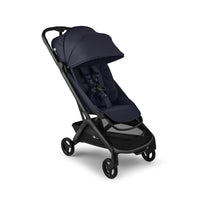
bugaboo butterfly pish posh baby Bugaboo - Otroški voziček Butterfly 2
SKU: 1815712462
bugaboo butterfly pish posh baby

bugaboo butterfly pish posh baby Bugaboo - Otroški voziček Butterfly 2

Sale price$19.30 Regular price$21.44
Save 10%

Pay in installments of $5.36 with ShopPay, AfterPay and Klarna

Shipping Estimate
USA
  • USA
  • CAN

Ships within 48 hours · Estimated delivery Jun 28 - Jul 3

Promo Codes Available:

For Your Every Summer RSVP, with Code: SUMMER15

Description

bugaboo butterfly pish posh baby Bugaboo - Otroški voziček Butterfly 2The ultra compact, one second fold travel stroller that simplifies trips around the block and beyond. Explore freely and move with ease as your growing baby enjoys ultimate comfort in the ergonomic seat. One second ultra compact fold Suitable for air travel, IATA compatible Roomy ergonomic seat for superior comfort Suitable for use from birth Multiple recline seat angles, including fully upright Large wheels for effortless strolling Full suspension to

The ultra-compact, one-second fold travel stroller that simplifies trips around the block and beyond. Explore freely and move with ease as your growing baby enjoys ultimate comfort in the ergonomic seat.​


  • One-second ultra-compact fold
  • Suitable for air travel, IATA-compatible
  • Roomy ergonomic seat for superior comfort
  • Suitable for use from birth
  • Multiple recline seat angles, including fully upright
  • Large wheels for effortless strolling
  • Full suspension to absorb city bumps
  • 8 kg (17.6 lbs) capacity underseat storage
  • Convenient storage pocket on the seat
  • Car seat compatible (adapters needed)
  • Lowest CO2 footprint in our stroller lineup
  • 37% CO2 reduced compared to the first Bugaboo Butterfly
  • Crafted with bio-based material and recycled aluminum
  • Built to last with premium-quality materials
  • Tested beyond industry standards​
  • Tested over 4,000 km (2,485 miles) with minimal damage
  • Durable water-repellent PFAS-free fabrics
  • 100% vegan leather handlebar grips​
  • Modular design supports repairs and refurbishment
  • Shipped from factory to warehouse with biofuels


Shipping Notes
  • Free Standard Shipping on $100+ Orders to the USA.
  • Except Preorder products are shipped in 48 hours.
  • Delivery to the USA:
  1. Standard Shipping : 3-10 business days
  • If time is of the essence, please consider selecting expedited delivery for faster service.
Exchange/Return Notes
  • We offer a 30-day return/exchange service after receiving.
  • Final sale items are not eligible for returns or exchanges.
  • To process your return/exchange, please contact us at [email protected]
  • Please click here for more details>>> Return & Exchange Policy
SKU: 1815712462
4.2 ★★★★★
Based on 2319 reviews
Sort
Highest Rating
Newest First
Oldest First
Product Reviews
R
Verified Purchase
Richard Hackathorn
Phoenix, US
★★★★★ 5
Excellent Textbook for Hands-On Learning of ML
Format: Kindle
This textbook is for the serious life-long learners of machine learning. There are at least two ways to ‘consume’ this book. For the expert in ML, this is a textbook to study as a clear comprehensive ML overview and then to dive into sections of interest or ignorance. The concepts are grounded in code examples and are well cited (with links) to sources. Further, this textbook is appropriate if you are TensorFlow-centric and want to broaden into cutting-edge ML models/tools coded in PyTorch. For a new learner to ML, this is a textbook to DO (not just READ) with hands-on and brain-engaged. If you realize that ML is a key life-long skill for your career, consider this textbook as part of a daily learning habit (10-30 min). From personal experience, my advice to the new learner is as follows… First, clone the GitHub repository, setup your Python environment, and study the textbook, while working through the notebooks. Go on tangents and break the code. Do this methodically as part of your daily learning habit, but do not hesitate to jump ahead several chapters to prepare for tomorrow’s meeting. There is enough excellent material here for a full year of ML adventures. I did a similar strategy with Raschka’s first textbook. About four years ago, I had finished Andrew Ng’s Deep Learning Specialization as a student in his first cohort. I knew the concepts well but could not do the actual application coding. I was surprised how my Python coding improved by following Raschka’s clean and elegant style. And Raschka’s code examples were meaty enough to be springboards into working applications. Several textbook editions later, what is different about this new edition? First, it moves you through scikit-Learn (a firm foundation) to PyTorch, instead of TensorFlow. PyTorch is a better stepping-stone, both conceptually and practically. With PyTorch, you will go further with less energy, while being able to convert your efforts into TensorFlow as needed. In addition, most of the cutting-edge ML/AI/DL research is in PyTorch. It is nice to read a recent arXiv paper, clone their repository, click on the Colab tutorial, and replicate their experiments, along with picking up a ton of new coding tricks & tips. I am excited to work through these PyTorch sections to hone my skills. Second, there is a clear recognition of model tracking and tuning practices. This is often a gap in other ML textbooks and courses. Once you progress beyond the simple demo examples in a lecture, you realize that the real work is experiments, more experiments, and still more experiments, so that you must understand what the model architecture and hyperparameters are doing to your dataset. There is good coverage of scikit-Learn pipeline, grid search, model performance, and the like. Third, ML/AI/DL practice is rapidly evolving. Every week new ML packages/services become available that could save much grief on your current project. What is refreshing about Raschka’s textbook series is that he constantly adding cutting-edge topics because he likes to stay current and to help us stay current. Hence, this edition contains recent ML treats as: transformers, self-supervised learning, autoencoders-to-GAN, graph neural networks, DBSCAN, t-SNE (with brief mention of UMAP), and PyTorch-Lightning.
WAS THIS REVIEW HELPFUL?YesReportShare
Reviewed in the United States on February 26, 2022
A
Verified Purchase
Amazon Customer
Draper, US
★★★★★ 4
Just learning it
Format: Paperback
Nice learning book just have to finish it
WAS THIS REVIEW HELPFUL?YesReportShare
Reviewed in the United States on December 10, 2025
K
Verified Purchase
Kindle Customer
Omaha, US
★★★★★ 5
Very useful book
Format: Paperback
I use it for the machine learning class I teach.
WAS THIS REVIEW HELPFUL?YesReportShare
Reviewed in the United States on May 3, 2026
T
Verified Purchase
Tommy Jonsson
Los Angeles, US
★★★★★ 5
Cover many areas in detail and recommendations for more to read for what's outside
Format: Paperback
Good book!
WAS THIS REVIEW HELPFUL?YesReportShare
Reviewed in the United States on May 4, 2026
M
Verified Purchase
Moses Kayanda
Louisville, US
★★★★★ 5
One of the best machine learning books...
Format: Paperback, Format: Paperback
Machine Learning can often be intimidating whether you are starting out or already a practitioner. It is easy to get stuck on one concept, walk away frustrated, or just copy that code you find on StackOverflow without really understanding what it does. What the authors of this book, Machine Learning with PyTorch and Scikit-Learn, have managed to do is to keep the reader engaged giving a deeper illustration as to how the concepts work. In this book, you get practical code examples, a detailed explanation of how the various library tools work, and exposure to the mathematical concepts behind machine learning algorithms. In addition, what I like about the book unlike many machine learning books is that the authors have managed to intuitively explain how each algorithm works, how to use them, and the mistake you need to avoid. I have not read a Machine Learning book that better explains Transformers as this one does. The authors have managed to give a detailed dive into this model architecture through well-explained codes and illustrations. As a reader, you walk away having intuitively grasped the concepts of attention and self-attention in ways that will make this crucial NLP architecture clear. You get exposed to pre-trained models from HuggingFace library which really helps to have that hands-on experience working with large datasets. As they have done throughout the book, the authors have broken down those complex mathematical operations into simple explanations that are easy to follow. What I generally like about the book is how it seamlessly connects all the chapters, not throwing off the reader. There are numerous external resources quoted throughout the book. This helps spark that curiosity to dig deeper. In addition, you get introduced to PyTorch, getting exposed to all those sophisticated libraries that help the reader learn how to maximize their compute power. I would say it is not intimidating at all even if you have not used PyTorch before. I would recommend this book to anybody seeking a textbook that is both easy to read and modern in its content. If were to rate the book I will give it a 10/10 as it really applies to both beginners and experienced practitioners, covers all the concepts one needs to apply in their operations, and acts as a quick reference.
WAS THIS REVIEW HELPFUL?YesReportShare
Reviewed in the United States on March 1, 2022